Navigating the world of personal finance and investing can feel like deciphering a complex financial code. This guide unravels the intricacies of both, highlighting their key differences and revealing how they synergistically contribute to long-term financial well-being. We’ll explore budgeting strategies, debt management techniques, diverse investment vehicles, and the importance of long-term financial planning, offering practical insights for individuals at all stages of their financial journey.
From understanding basic budgeting principles to delving into the nuances of stock market investments, we aim to empower you with the knowledge and tools to make informed decisions about your financial future. Whether you’re a recent graduate starting to build your financial foundation or a seasoned professional looking to refine your investment strategy, this guide provides a roadmap to navigate the path towards financial security and success.
Defining Investing
Investing involves allocating resources, typically money, with the expectation of generating future income or increasing its value over time. Unlike speculation or gambling, investing is based on thorough research, analysis, and a long-term perspective. It focuses on the underlying value and potential growth of an asset, rather than relying solely on chance or short-term market fluctuations.Investing differs significantly from speculation and gambling.
Speculation involves taking on high risk in anticipation of short-term price movements, often with limited understanding of the underlying asset. Gambling, on the other hand, is purely based on chance with no expectation of generating returns based on any inherent value. Investing, conversely, aims for consistent, long-term growth based on the fundamental value and potential of the investment.
Investment Vehicles
A variety of investment vehicles are available, each offering a unique blend of risk and return. Understanding these options is crucial for aligning investments with individual financial goals and risk tolerance.Stocks represent ownership shares in a company. Their value fluctuates based on the company’s performance and overall market conditions. Bonds, conversely, are debt instruments where an investor lends money to a company or government in exchange for fixed interest payments and the eventual return of principal.
Real estate involves investing in properties, either for rental income or potential appreciation in value. Mutual funds pool money from multiple investors to invest in a diversified portfolio of assets, offering diversification and professional management.
Risk and Reward Profiles
The risk and reward associated with each investment vehicle vary considerably. Stocks, for instance, offer the potential for high returns but also carry significant risk, as their value can fluctuate dramatically. Bonds generally offer lower returns but are considered less risky than stocks, particularly government bonds. Real estate can provide both rental income and capital appreciation, but it also involves significant upfront costs and potential illiquidity.
Mutual funds offer diversification, reducing risk, but their returns are typically less volatile than individual stocks. The time horizon for investment also significantly impacts risk and reward. Longer time horizons allow for greater potential returns but also expose investors to more market fluctuations.
Investment Comparison
| Investment Type | Risk Level | Potential Return | Time Horizon |
|---|---|---|---|
| Stocks | High | High | Long-term (5+ years) |
| Bonds | Medium to Low | Medium | Medium-term (1-10 years) |
| Real Estate | Medium to High | Medium to High | Long-term (5+ years) |
| Mutual Funds | Medium | Medium | Medium to Long-term (3+ years) |
Personal Finance vs. Investing
Personal finance and investing, while interconnected, represent distinct approaches to managing your financial resources. Personal finance focuses on the day-to-day management of money, ensuring sufficient funds for current needs and short-term goals. Investing, conversely, involves allocating capital to assets with the expectation of generating returns over the long term. Understanding the nuances of each is crucial for building a strong financial foundation.
Key Differences Between Personal Finance and Investing
Personal finance prioritizes short-term financial stability and responsible money management. This encompasses budgeting, debt management, saving for immediate expenses, and planning for near-future goals like a down payment on a house or a child’s education. Investing, on the other hand, centers on long-term wealth creation through the strategic allocation of assets in the expectation of growth and appreciation. While both are essential for overall financial well-being, their goals, timelines, and risk tolerance differ significantly.
Goals and Timelines
The primary goal of personal finance is to achieve financial security and meet immediate and short-term needs. Timelines are typically short to medium-term, ranging from a few months to a few years. Investing, conversely, aims to build long-term wealth through capital appreciation. The investment timeline is typically long-term, often spanning decades, aligning with retirement planning or other significant long-term objectives.
For example, saving for a down payment on a house is a personal finance goal with a 2-5 year timeline, while investing in retirement requires a 20-30 year or longer horizon.
The Interrelationship of Personal Finance and Investing
Personal finance forms the bedrock for successful investing. A solid foundation in budgeting, debt management, and emergency savings ensures that you have the financial stability to withstand market fluctuations and continue investing during challenging times. Effectively managing your personal finances frees up resources to allocate towards investments, accelerating the wealth-building process. In essence, strong personal finance practices provide the necessary financial runway for long-term investment success.
Think of it as this: you can’t effectively invest if you’re constantly struggling to meet your monthly bills.
Short-Term and Long-Term Implications
The following points highlight the contrasting implications of focusing solely on personal finance versus integrating investing:
A comparison of short-term and long-term implications is crucial for understanding the holistic impact of prioritizing either personal finance or incorporating investment strategies.
- Short-Term (1-3 years): Focusing solely on personal finance may lead to improved short-term financial stability and reduced debt. However, it may limit long-term wealth accumulation potential. Integrating investing from the start, even with small amounts, allows for the compounding effect of returns over time, which could significantly benefit the individual’s financial status in the long run.
- Long-Term (10+ years): A singular focus on personal finance without investing may leave individuals with a comfortable but potentially limited financial future, especially in the face of inflation. Investing, on the other hand, offers significant potential for wealth growth and a more secure retirement. Consistent investing, even during periods of market volatility, allows for long-term wealth accumulation, potentially exceeding the growth achievable through personal finance alone.
For instance, someone investing consistently in a diversified portfolio over 20 years could see significantly greater wealth than someone solely focused on personal finance, particularly if the investment choices have a positive return rate.
The Role of Budgeting in Both
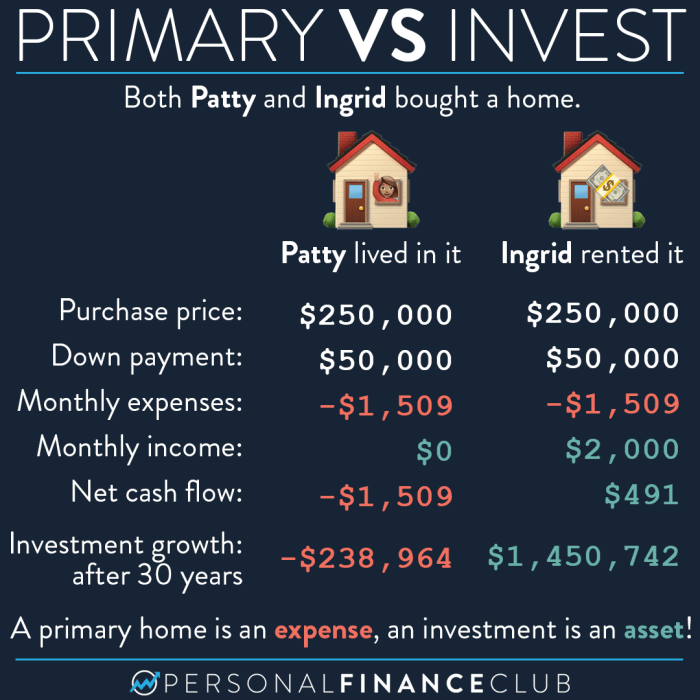
Budgeting is the cornerstone of both effective personal finance and successful investing. A well-structured budget allows you to allocate your resources strategically, ensuring you meet your financial goals while simultaneously building wealth through investments. Without a clear understanding of your income and expenses, achieving financial stability and building a robust investment portfolio becomes significantly more challenging.Budgeting provides a roadmap for achieving personal financial goals and simultaneously fuels investment strategies.
It’s the bridge connecting your current financial reality with your future aspirations. By carefully tracking income and expenses, you gain a clear picture of your financial health, identifying areas for improvement and opportunities for growth. This clarity is crucial for informed decision-making, whether it involves paying down high-interest debt or consistently contributing to your investment accounts.
Effective Fund Allocation within a Budget
Creating an effective budget involves strategically allocating funds across several key areas: savings, debt repayment, and investment contributions. The ideal allocation will vary based on individual circumstances, such as age, income, debt levels, and investment goals. However, a common approach involves prioritizing high-interest debt repayment, followed by building an emergency fund, and then allocating funds towards investments. For instance, someone with significant credit card debt might prioritize debt reduction before aggressively investing, while someone with a stable financial foundation might allocate a larger percentage of their income towards investments.
A general guideline is to allocate a percentage of your income to each category, adjusting these percentages as your financial situation evolves.
Impact of Different Budgeting Methods
Various budgeting methods can significantly impact both personal finance and investment plans. The 50/30/20 rule, for example, suggests allocating 50% of your after-tax income to needs, 30% to wants, and 20% to savings and debt repayment. While this rule provides a simple framework, it may not be suitable for everyone, particularly those with substantial debt or aggressive investment goals. Zero-based budgeting, on the other hand, requires you to allocate every dollar of your income to a specific purpose, ensuring that all spending is intentional and planned.
This method can be more time-consuming but provides a higher degree of control over your finances, facilitating more effective investment planning. Choosing the right method depends on individual preferences and financial circumstances. Both methods, however, emphasize the importance of tracking expenses and making conscious spending decisions.
Illustrative Representation of Consistent Budgeting’s Impact
Imagine a bar graph. The horizontal axis represents time (in years), and the vertical axis represents net worth. A line representing someone without a budget shows slow, inconsistent growth, potentially even periods of decline due to unexpected expenses or impulsive spending. In contrast, a line representing someone with a consistent budget shows steady, upward growth. The difference between the two lines becomes increasingly significant over time, demonstrating the power of consistent budgeting in accumulating wealth.
For example, after 10 years, the individual with a budget might have a net worth twice as high as the individual without a budget, showcasing the compounding effect of disciplined financial management and consistent investment contributions. This visual representation underscores that consistent budgeting is not just about managing expenses; it’s a powerful tool for wealth creation.
Debt Management and its Impact
High-interest debt significantly impacts both personal finances and investment potential. It diverts funds that could otherwise be used for savings, investments, and building wealth, effectively hindering financial progress. Understanding how debt affects your financial trajectory is crucial for developing a robust strategy that balances debt reduction with investment growth.High-interest debt acts as a significant drag on personal finances by consuming a substantial portion of your income.
This reduces the amount available for essential expenses, savings, and investments. Furthermore, the compounding effect of interest payments can quickly escalate the overall debt burden, making it increasingly challenging to achieve financial goals. For example, a high-interest credit card debt can easily consume a large portion of your monthly income, leaving little room for investing in retirement accounts or other growth opportunities.
This ultimately reduces your investment potential and slows the accumulation of wealth.
Strategies for Managing and Reducing Debt While Investing
Effectively managing debt while building an investment portfolio requires a strategic approach that prioritizes both debt reduction and investment growth. This often involves a delicate balance, prioritizing high-interest debt repayment while still allocating resources towards investments with potential for higher returns than the interest rates on the debt.
Debt Repayment Plans Integrated with Investment Strategies
Integrating debt repayment plans with investment strategies involves a multi-faceted approach. A common strategy is the debt snowball or debt avalanche method, where you focus on paying off high-interest debts first, while simultaneously making minimum payments on other debts. This approach prioritizes minimizing interest payments, freeing up more capital for investments as debts are eliminated. Another strategy involves allocating a portion of your income towards both debt repayment and investments, strategically balancing these two crucial financial aspects.
For example, you might allocate 60% of your surplus income to high-interest debt repayment, and 40% to investments like index funds or retirement accounts. This approach ensures progress on both fronts, leading to a more robust financial future.
A Step-by-Step Debt Reduction Plan Incorporating Investment Considerations
- Assess your financial situation: List all debts (credit cards, loans, etc.) including interest rates and minimum payments. Calculate your monthly income and expenses to determine your surplus income.
- Prioritize high-interest debts: Focus on paying off debts with the highest interest rates first (debt avalanche method). This minimizes the total interest paid over time.
- Create a budget: Allocate a specific portion of your surplus income towards debt repayment. This could be a fixed amount or a percentage of your income.
- Automate payments: Set up automatic payments for your debts to ensure consistent repayment and avoid late fees.
- Allocate funds for investments: Once you have a handle on your debt repayment, allocate a portion of your surplus income to investments. Start with low-risk, diversified investments like index funds or retirement accounts.
- Re-evaluate regularly: Monitor your progress regularly and adjust your plan as needed. As you pay off debts, you can increase your investment contributions.
- Seek professional advice: Consider consulting a financial advisor for personalized guidance on debt management and investment strategies. They can help you tailor a plan that aligns with your financial goals and risk tolerance.
Long-Term Financial Planning
Sound personal finance management and strategic investing are not merely short-term endeavors; they are cornerstones of building a secure and prosperous future. A well-defined long-term financial plan integrates both aspects, allowing individuals to achieve their long-term goals, such as comfortable retirement or funding children’s education. This integration ensures that financial resources are allocated effectively across immediate needs and future aspirations.Long-term financial planning requires a holistic approach, encompassing both the careful management of current finances and the strategic growth of investments over an extended period.
Effective personal finance practices, such as budgeting and debt management, provide the foundation for consistent savings, which then fuel investment opportunities. Simultaneously, a strategic investment approach, mindful of risk and diversification, ensures that assets grow at a pace sufficient to meet long-term objectives.
The Integration of Personal Finance and Investment Strategies
A comprehensive financial plan should seamlessly integrate personal finance and investment strategies. This means aligning short-term budgeting and debt reduction goals with long-term investment targets. For example, consistent savings from a well-managed budget can be channeled into diversified investment portfolios designed to grow over time. Regularly reviewing and adjusting this plan based on life changes (marriage, children, career shifts) and market conditions is crucial for maintaining its effectiveness.
A successful plan considers both immediate needs (housing, transportation, food) and future aspirations (retirement, education).
Diversification and Risk Management in Long-Term Investment Planning
Diversification and risk management are paramount to long-term investment success. Diversification involves spreading investments across different asset classes (stocks, bonds, real estate) to mitigate the impact of poor performance in any single asset. Risk management involves understanding the level of risk associated with different investments and aligning them with an individual’s risk tolerance and time horizon. A younger investor with a longer time horizon may be more comfortable with higher-risk investments, such as growth stocks, while an older investor nearing retirement might prefer lower-risk, income-generating investments, such as bonds.
Regular rebalancing of the portfolio ensures that the desired asset allocation is maintained over time.
A Sample Long-Term Financial Plan
The following Artikels a sample long-term financial plan. Individual plans will vary significantly based on personal circumstances, goals, and risk tolerance.
This example assumes a 30-year time horizon and targets a comfortable retirement.
- Phase 1 (Ages 25-35): Aggressive Growth Phase
- Goal: Build a strong financial foundation and maximize investment growth.
- Investment Strategy: High allocation to stocks (70-80%), with diversification across various sectors and market caps. Consider index funds and ETFs for broad market exposure.
- Risk Mitigation: Regularly monitor portfolio performance and rebalance as needed. Consider dollar-cost averaging to reduce the impact of market volatility.
- Personal Finance Focus: Aggressive debt reduction (high-interest debt first), maximizing savings rate (aim for 15-20% of income).
- Phase 2 (Ages 35-50): Balanced Growth Phase
- Goal: Maintain growth while gradually reducing risk.
- Investment Strategy: Gradually shift allocation towards bonds (30-40%), maintaining diversification across asset classes. Consider adding real estate investments.
- Risk Mitigation: Continue regular portfolio monitoring and rebalancing. Explore hedging strategies to protect against market downturns.
- Personal Finance Focus: Focus on long-term savings goals (retirement, education). Maintain a healthy emergency fund (3-6 months of expenses).
- Phase 3 (Ages 50-65): Conservative Growth Phase
- Goal: Preserve capital and generate income for retirement.
- Investment Strategy: Higher allocation to bonds (50-60%), with a smaller allocation to stocks for continued growth. Consider annuities or other income-generating investments.
- Risk Mitigation: Focus on capital preservation. Regularly review and adjust the investment strategy based on market conditions and retirement needs.
- Personal Finance Focus: Maximize retirement savings contributions. Plan for healthcare expenses in retirement.
Ultimately, personal finance and investing are intertwined aspects of a holistic financial strategy. Effective personal finance provides the bedrock for responsible investing, enabling you to allocate resources strategically and achieve your long-term financial goals. By mastering budgeting, managing debt effectively, and understanding various investment options, you can create a robust financial plan that secures your future and allows your wealth to grow.
Remember that consistent planning, informed decision-making, and a long-term perspective are key to achieving lasting financial success.
FAQ Insights
What is the difference between saving and investing?
Saving is setting aside money for short-term goals (emergency fund, down payment), typically in low-risk accounts. Investing involves using money to acquire assets (stocks, bonds) with the expectation of generating higher returns over the long term, but also accepting higher risk.
How much should I invest versus save?
The ideal allocation depends on your individual circumstances, risk tolerance, and financial goals. A general guideline is to prioritize building an emergency fund (3-6 months of living expenses) before significantly investing. Then, consider your age, risk tolerance, and time horizon when determining the appropriate balance.
What are some low-risk investment options for beginners?
Index funds, bonds, and high-yield savings accounts are generally considered lower-risk options for beginners. These provide diversification and relatively stable returns, though returns may be lower compared to higher-risk investments.
When should I start investing?
It’s beneficial to start investing as early as possible to take advantage of the power of compounding. Even small, consistent investments can accumulate significantly over time. Prioritize establishing a solid financial foundation (emergency fund, debt management) before significantly allocating funds to investments.


